Programme and abstract committees and themes
The programme has been built across six themes and is overseen by a group of influential international experts.


Full Spectrum
The six themes provide the framework through which the global cancer community are invited to deliver a suite of innovative and interactive sessions, covering the full spectrum of cancer control. A number of threads cutting across the six themes have been identified, including equity, patient perspective, leadership and sustainable impact.
Executive Programme Leads
The World Cancer Congress 2026 programme will be led by Jeff Dunn, Anne Lee and Miriam Mutebi.
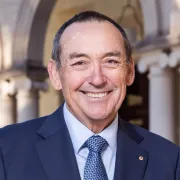
Jeff
Dunn
Prof. Jeff Dunn AO is Chief of Mission and Head of Research at the Prostate Cancer Foundation of Australia. He is also Professor of Social and Behavioural Science and Chair of Cancer Survivorship at the University of Southern Queensland. He is a Board Member and Chair of the Audit and Risk Committee for the West Moreton Hospital and Health Service. He served as President of the Union for International Cancer Control from 2022 to 2024.
His work in cancer control spans 30 years, in which time he has dedicated his career to the development of strategies that underpin cancer survival and improve awareness of the disease with a special focus on the social and behavioural aspects of cancer and has over 200 publications, including peerreviewed manuscripts, chapters, books and reports. In 2014 Jeff was appointed an Officer in the Order of Australia for distinguished service to medical administration through leadership of cancer control organisations and promotion of innovative and integrated cancer care programmes.
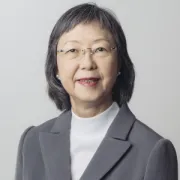
Anne
Lee
Prof. Anne Lee is currently the Vice-Chairman of Hong Kong Anti-Cancer Society. In addition, she serves as Chief of Service of the Center of Clinical Oncology at the University of Hong Kong - Shenzen Hospital. She is also an Adjunct Professor at the Medical Faculty of Universitas Indonesia. Prof Lee is an Honorary Professor at the University of Hong Kong. She serves as Hong Kong Ambassador at the World Cancer Research Fund and as Coordinator of UICC's TNM Global Advisory Group.
In addition to her professional qualification as Fellow of the Royal College of Radiologists in Clinical Oncology (United Kingdom) and Fellow of the Hong Kong Academy of Medicine, she was conferred Doctor of Medicine by the University of Hong Kong in 2008, and was awarded the Sir Patrick Manson Gold Medal. She has been the President of Hong Kong Head and Neck Society and Chairman of Hong Kong Nasopharyngeal Cancer Study Group. Currently she is the Vice President of Hong Kong College of Radiologists.
Dr. Lee's main research contributions focus on nasopharyngeal cancer. She serves in editorial board of many international journals. She also serves in many international academic organizations, including being the Coordinator of the Global Advisory Group and a member of TNM Expert Advisory Panel on Head and Neck Cancers for the Union for International Cancer Control. Dr. Lee has received many honors. She was awarded Gilbert H. Fletcher Distinguished Professor Lecturer by The University of Texas, M.D. Anderson Cancer Center, United States, in 2009, Honorary Membership by the European Society for Radiotherapy & Oncology in 2012, Honorary Membership by the Radiological Society of North America in 2013, and Wharton Lecturer by Princess Margaret Cancer Centre, Canada, in 2015.

Miriam
Mutebi
Dr. Miriam Mutebi is a Consultant Breast Surgical Oncologist and Assistant Professor in the Department of Surgery at the Aga Khan University Hospital in Nairobi, Kenya. She is also a clinical epidemiologist and health systems researcher with a research focus on understanding barriers to access for women with cancers in Sub-Saharan Africa and in designing interventions to mitigate those barriers.
She is a member of the UICC Board of Directors for the term 2024-2026. She is the President of the African Organization for Research and Training in Cancer (AORTIC), Immediate Past president for the Kenya Society of Haematology and Oncology (KESHO) and on the board of directors of the Union for International Cancer Control (UICC).
She is also the co-founder of the Pan African Women’s Association of Surgeons which was developed to mentor and provide transformative leadership for women in surgery in order to improve surgical care and pathology on the continent and is part of the Kenya Association of Women Surgeons. She is the Co-chair of the National Cancer Taskforce in Kenya, Chair of the Commonwealth Taskforce for the elimination of Cervical Cancer and a commissioner with 5 Lancet commissions including Women, Power and Cancer, Cancer in sub-Saharan Africa and Breast Cancer.
She is the recipient of the ASCO 2024 Humanitarian Award for going above and beyond the call of duty in providing outstanding patient care through innovative means and exceptional service and leadership. She is currently pursuing a pilot's licence in order to extend breast care services to marginalised areas.).
Executive Abstracts Leads
The World Cancer Congress 2026 abstract programme will be led by David Hill, Christopher Jackson and Rina Hui and supported by the theme co-chairs listed below.
The abstract committee is also grateful to the team of abstract reviewers that have supported the abstract review process.
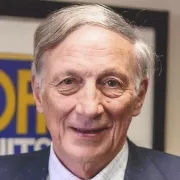
David
Hill
Professor David Hill PhD, MD (hon), DSc (hon) is a behavioural scientist who served as CEO of the Cancer Council Victoria (Australia) from 2002 to 2011, and as President of UICC from 2008 to 2010. He was founding Director of the Centre for Behavioural Research in Cancer between 1986 and 2002. He has authored or co-authored over 200 peer reviewed scientific articles, books and book chapters in the medical, public health and psychological literature. His published work includes research on the prevalence of adolescent and adult smoking, strategies for smoking cessation, reduction of smoking uptake, smoking regulation, behavioural aspects of cancer screening, monitoring trends in skin cancer prevention, and exploring determinants of behaviours related to skin cancer prevention and psychosocial aspects of the cancer experience.
He has professorial appointments at the University of Melbourne and University of Newcastle (Australia) and was made an Officer in the Order of Australia (AO) for his contributions in the field of cancer control.
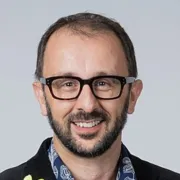
Christopher
Jackson
Professor Christopher Jackson is a medical oncologist, academic, and health-system leader with a strong international profile in cancer policy, research, and clinical leadership. Based in Ōtepoti Dunedin, New Zealand, he combines an active subspecialty clinical practice in gastrointestinal cancers and melanoma with senior leadership roles spanning national cancer control, global oncology, and medical education.
He is Professor of Oncology at the University of Otago and Deputy Dean of the Dunedin School of Medicine, where he contributes to undergraduate and postgraduate medical education, clinical research supervision, and academic leadership. His clinical practice is based at Dunedin Hospital and Mercy Cancer Care.
Professor Jackson is Co-Lead of the Cancer National Clinical Network for Te Whatu Ora – Health New Zealand, providing national clinical leadership across systemic anticancer therapy (SACT). In this role, he leads programmes focused on improving equity of access, consistency and quality of cancer medicines, reducing treatment waiting times, strengthening service organisation, and implementing new models of cancer care across New Zealand.
From 2015 to 2021, he served as Medical Director of the Cancer Society of New Zealand. During this period, he played a key advocacy and advisory role in the development of the New Zealand Cancer Action Plan and the establishment of the national Cancer Control Agency, Te Aho o Te Kahu.
Internationally, Professor Jackson is a Board Member of the Union for International Cancer Control (UICC) and a Programme Board member of the International Cancer Benchmarking Partnership (ICBP). He is a founding leader of the Common Sense Oncology movement, promoting patient-centred, evidence-based, and sustainable cancer care globally. He has previously served on ASCO’s Asia-Pacific Regional Council and is currently a member of the Editorial Board of JCO Global Oncology. He is an active member of ASCO, ESMO, and the Australasian Gastro-Intestinal Trials Group.
His research interests span health systems and health policy, clinical trials and drug development, translational research, and cancer care quality measurement. He works closely with governments, international organisations, research groups, and clinical networks to translate evidence into equitable, high-quality cancer care at scale.
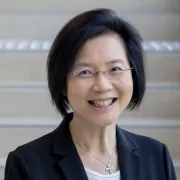
Rina
Hui
Rina Hui is a Clinical Professor and the Director of the Centre of Cancer Medicine at the University of Hong Kong. She has a clinical and research focus on breast and lung cancers. Rina also serves as a member of the Senate, a member of the Honorary Fellowships Committee and chairs the Committee of Discontinuation at the University of Hong Kong. Rina is a steering committee member of the Hong Kong Breast Cancer Registry and a council member of the Hong Kong Cancer Therapy Society. After completing her medical degree at The University of Sydney and specialist training at the Royal North Shore Hospital, Rina undertook translational research in cyclin D1-CDK4/6-p16INK4a-pRb pathway in breast cancer at the Garvan Institute of Medical Research and was awarded a PhD degree. Before joining HKU in January 2023, Rina was a Clinical Professor at the University of Sydney and a Senior Medical Oncologist at Westmead Hospital, Australia. She previously served as Co-chair of Oncology Block at the Sydney Medical School, the University of Sydney and served in the written examination committee for the Royal Australasian College of Physician. She was the Head of Clinical Trials at the Westmead Breast Cancer Institute, a member of the clinical advisory board and research advisory committee of the Westmead Breast Cancer Institute, a member of the Medical Oncology Group of Australia Expert Group for lung cancer, a member of the Basic Sciences of Oncology Course Subject Matter Expert Group. Rina serves on the Education Committee for International Association for the Study of Lung Cancer (IASLC) and was a member of the scientific program committee for European Society of Medical Oncology Congress in 2021 and 2022. Rina has been principal investigator on many clinical trials, including phase I as well as many landmark practice-changing phase III clinical studies of immunotherapy and targeted therapies in breast and lung cancers, resulting in publications in highly ranked journals.



World Cancer Congress Theme Co-Chairs
Theme 1: Prevention, screening and early detection
The programme in this theme will explore primary prevention, including major risk factors, health promotion, examples of best practices in new evidence-based prevention strategies, and vaccines. Exposure to environmental risk factors and unhealthy environments will be included, as well as new areas of development in policy, programme management, communications, and education.
- Risk stratification
- Artificial intelligence in cancer screening
- Multicancer early detection tests (MCED)
- Vaccines
- Prevention in high-risk groups
- Successful health promotion and cancer prevention
- Advocacy and partnerships
- Blood tests
- Effective policies for cancer prevention
- Economics of prevention
- Imaging and endoscopy
- Media and communications
- Regulation
- Major cancer risk factors
- Alcohol and cancer
- Diet, weight and physical activity
- Ultraprocessed foods and cancer
- UV and cancer
- Environment and workplace
- Air pollution and cancer
- Tobacco and cancer (please refer to the Tobacco Control theme)
- Prevention and cancer inequalities
- Health literacy
- Access to information and programmes
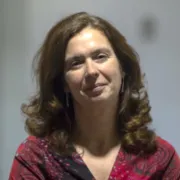
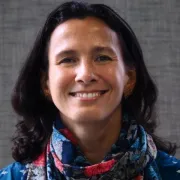
Programme Committee Theme Co-Chairs
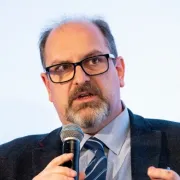
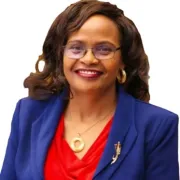
Abstract Committee Theme Co-Chairs
Theme 2: Cancer research and progress
Programme Committee Theme Co-Chairs
Abstract Committee Theme Co-Chairs
The programme in this theme will be curated to highlight recent scientific and clinical advances in aetiology, prevention, diagnosis, and treatment of cancer, with a particular focus on post-pandemic recovery. What lessons were learned during the COVID-19 pandemic and what research was done to help cancer health systems regain lost ground and strengthen provision to address the cancer burden in the future? What practices were implemented during the pandemic and what evidence was collected to support modifying the delivery of care? What new modalities or treatment algorithms were proven to have greater efficacy or effectiveness and could have an enduring legacy to overcome inequalities and inequities in cancer care. Topics in these sessions will showcase scientific, translational, clinical, and technological advancements alongside Implementation science and behavioural research.
- Artificial intelligence/deep learning/big data
- Precision oncology (targeted therapies and genomics, matching treatment to the patient and tumour)
- Advances in clinical trial design (pragmatic, patient-centric, decentralised)
- Optimising cancer treatment in older populations (geriatric oncology)
- Progress in cancer treatment – systemic therapies, radiation, surgery
- Treatment-related adverse events and management - Measuring impact of treatment on the patient - PROs/QoL
- Palliative care and end of life research
- Telemedicine and remote medicine and monitoring (including remote treatment planning, virtual tumour boards, etc)
- Implementation science and advancing evidence-based projects to scale
- Behavioural research
Theme 3: Healthcare systems and policies
This theme adds value by channeling intellectual effort, collaborations, access to shared resources to stimulate dialogue about implementing global commitments at a national level, as well as strengthen national, regional and local health systems and guiding quality improvement across different aspects of sustainable development, policy and planning, infrastructure, measurement, reporting and performance.
- UHC and making cancer care funding sustainable
- Access to cancer medicine and technology
- Harnessing data for better health outcomes
- Building cancer information systems
- Monitoring and evaluation of efficiency and quality of cancer care
- Using technology to drive cancer control and access to care
- Delivering quality cancer care services, including building the cancer workforce
- Patient navigation system
- Political, legislative and regulatory system barriers and solutions to enhance cancer control
- Health systems research relevant to cancer
- Partnerships for better cancer control and care policies: advancing SDG17
Programme Committee Theme Co-Chairs

Abstract Committee Theme Co-Chairs

Theme 4: Cancer treatment and palliative care
Programme Committee Theme Co-Chairs
Abstract Committee Theme Co-Chairs

This theme will examine novel interventions to support patient engagement and survivorship in a variety of cancer care delivery settings. It focuses on patient experience and quality of outcome, exploring patient and family engagement, wrestles with rights and expectations of cancer patients and their families and the challenges of access, fairness and consistency of experience and care. It will explore the role of complimentary therapies, identify experiences with alternative treatments and invite challenging discussions about balance of investment and patient power. It invites exploration of measurement issues, prioritisation of service delivery, communication skills of health care professionals, and tools to drive health care facility culture and survivorship. Fundamental questions around palliative care, pain relief and end-of-life issues will be discussed.
- Overcoming barriers to palliative care globally
- Universal Health Coverage and advocacy for palliative care
- Measuring outcomes in palliative care (clinical, organisational, utilisation, national progress)
- Access to essential palliative care and cancer treatment medicines
- Integration of palliative and oncology care for adults and children
- Improving and standardising education and training in palliative care
- Health workforce issues in palliative care
- Clinical guideline development in oncology and palliative care for improved symptom management
- Policy development in palliative care
- Palliative care in primary care
- Implementation of palliative care in resource-limited settings
- Sustainable financing for palliative care
- Patient and caregiver perspectives on palliative needs
- Building capacity in oncology and palliative care for adolescents and young adults
Theme 5: Tobacco control
This theme will examine the WHO Framework Convention on Tobacco Control (WHO FCTC) and its guidelines, providing the foundation for countries to implement and manage tobacco control.
- Monitor tobacco use and prevention policies
Data are necessary to implement and evaluate effective tobacco control policies. Only through accurate measurement of the tobacco epidemic and of the interventions to control it can those interventions be effectively managed and improved. Good monitoring provides policy-makers with information about the extent of the epidemic in a country and how to tailor policies to the needs of different groups. Disseminating the information broadly and effectively gives all stakeholders a clearer picture of the epidemic and provides advocates for tobacco control with important evidence to bolster the case for stronger policies.
- Protect people from exposure to second-hand tobacco smoke
All people have a right to breathe clean air. There is no safe level of exposure to second-hand smoke, which causes heart disease, cancer and many other diseases. Even brief exposure can cause serious damage. Smoke-free legislation is popular wherever it is enacted, and these laws do not harm business. Any country, regardless of income level, can implement effective smoke-free legislation. Only a total ban on smoking in public places, including all indoor workplaces, protects people from the harms of second-hand smoke, helps smokers quit and reduces youth smoking. Guidelines to Article 8 of the WHO Framework Convention on Tobacco Control help countries know exactly what to do to protect their people from second-hand smoke.
- Offer help to quit tobacco use
The more than one billion smokers worldwide who are addicted to tobacco are victims of the tobacco epidemic. When informed of the risks, most tobacco users want to quit, but few get help and support to overcome their dependence. Health-care systems have primary responsibility for treating tobacco dependence. Programmes should include tobacco cessation advice incorporated into primary health-care services, easily accessible and free telephone help lines (known as quit lines), and access to low-cost medicines. All health-care workers should become advocates for tobacco control. Governments can use some tobacco tax revenues to help tobacco users free themselves from addiction.
- Warn about the dangers of tobacco
Few tobacco users understand the full extent of their health risk. Health warnings on tobacco packaging reach all smokers and cost governments nothing. As laid out in guidelines to Article 11 of the WHO Framework Convention on Tobacco Control, warnings should appear on both the front and back of the packaging and be large and clear and describe specific illnesses caused by tobacco. Pictures of disease have a greater impact than words alone. In addition, anti-tobacco advertisements can publicise tobacco’s dangers. Use of graphic images demonstrating the harm of tobacco use can be especially effective in convincing users to quit. In addition to paid advertising, reaching out to the news media can effectively and inexpensively disseminate anti-tobacco messaging.
- Enforce bans on tobacco advertising, promotion and sponsorship
The tobacco industry spends tens of billions of dollars worldwide each year on advertising, promotion and sponsorship. A total ban on direct and indirect advertising, promotion and sponsorship, as provided in guidelines to Article 13 of the WHO Framework Convention on Tobacco Control, can substantially reduce tobacco consumption and protect people, particularly youths, from industry marketing tactics. To be effective, bans must be complete and apply to all marketing categories. Otherwise, the industry merely redirects resources to nonregulated marketing channels. The tobacco industry strongly opposes such comprehensive bans because they are effective in reducing tobacco use.
- Raise taxes on tobacco
Increasing the price of tobacco through higher taxes is the single most effective way to encourage tobacco users to quit and prevent children from starting to smoke. Taxes on inexpensive tobacco products should be equivalent to higher-priced products, such as premium-brand cigarettes, to prevent substitution in consumption. Taxes need to be increased regularly to correct for inflation and consumer purchasing power. Tobacco taxes are generally well accepted by the public and raise government revenues. Allocating tax revenues for tobacco control and other important health and social programmes further increases their popularity.
Programme Committee Theme Co-Chairs

Abstract Committee Theme Co-Chairs


Theme 6: People with lived experience
Programme Committee Theme Co-Chairs

Abstract Committee Theme Co-Chairs

This theme aims to integrate patient voices through experiences and best practice sharing. Here we examine the critical role of patient support programmes and the organisation of patient support groups. This includes the specific challenges met in developing and maintaining activities for patients, their relatives and caregivers.
Patient voices
We are looking for case studies highlighting experiences and best practices sharing regarding the engagement of patients and caregivers and the representation of their perspectives in all phases of the cancer control process, from advocacy and awareness-raising to patient-centred healthcare systems. The case studies can also cover community-based interventions, mobilisation of patients and survivors as well the representation of the diversity of patient voices as a critical aspect of the improvement of cancer prevention and control at the local, regional and global levels.
Examples:
- Patient advocacy - guidelines
- Patient communication, date and medical information - including in the digital era
- Educational needs of the patient community
- Opportunities for collaboration amongst patients (programmes, online platforms...)
- Cultural sensitivities and stigma
- New models for community mobilisation and engagement
Survivorship and patient support
Patient support programmes are playing a critical role in assisting cancer patients and ensuring the quality of care along the cancer continuum. We are looking for sessions integrating the practical and psychosocial accompaniment of patients and caregivers to ensure access to adapted care and improve patient outcomes, the quality of life and experience during and after the cancer journey. It also includes interventions dedicated to rehabilitation programmes for survivors.
Examples:
- Access to care
- Quality cancer care
- Patient navigation programmes
- Value in cancer care
- Drugs shortages, especially in LMICs
- Quality of life: when do we stop treating?
- Life after cancer
- Sexuality and cancer treatment
- Patients' financial considerations, including health insurance concerns
- Definition and measurement of patients' care expectations (service features, accessibility of information, environmental factors, equipment availability and functionality, etc.)
- The cancer journey for families of cancer patients
Organisational development
As organisations, patient support groups are facing specific challenges in terms of developing, maintaining and increasing their activities with a view to achieving their objectives and improving their impact on patients and caregivers. While patient groups are gaining in professionalism and expertise, they are also facing specific challenges such as a higher dependence on volunteerism, access to qualified support providers and increasing needs for expertise in fundraising and advocacy. We are looking for sessions integrating the successes and challenges of organisational aspects of patient support groups.
Examples:
- Organisational development of patient support groups: how does it workImpact of shrinking health care resources
- Innovative sustainable funding models within today’s limited budgets
- Navigating the legal and policy environments for patients and patient support groups
- Peer to peer support, especially at the leadership level
- Educational needs and training opportunities for patient support groups
- Educational needs of the professional oncology community
- Collaboration across patient support groups, across regions and across diseases